Static QR Payments
The same payment QR can be used across transactions, requiring customers to manually enter the payable amount.
Loading page…
BrandPOS SoftPOS digitizes the payment process for bike service centers by creating a unique invoice and payment request for every completed service, helping improve transaction visibility and make customer handover more efficient.
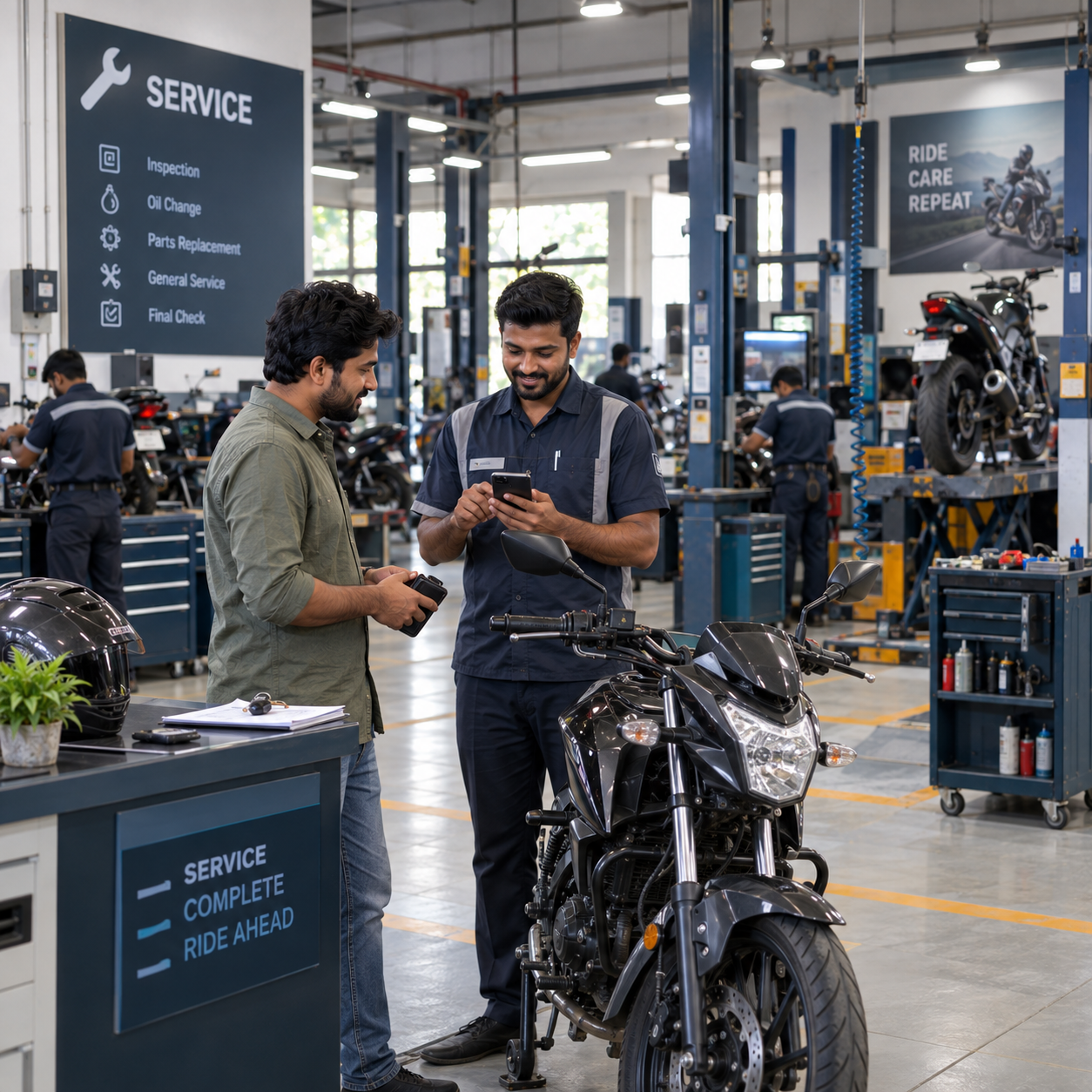
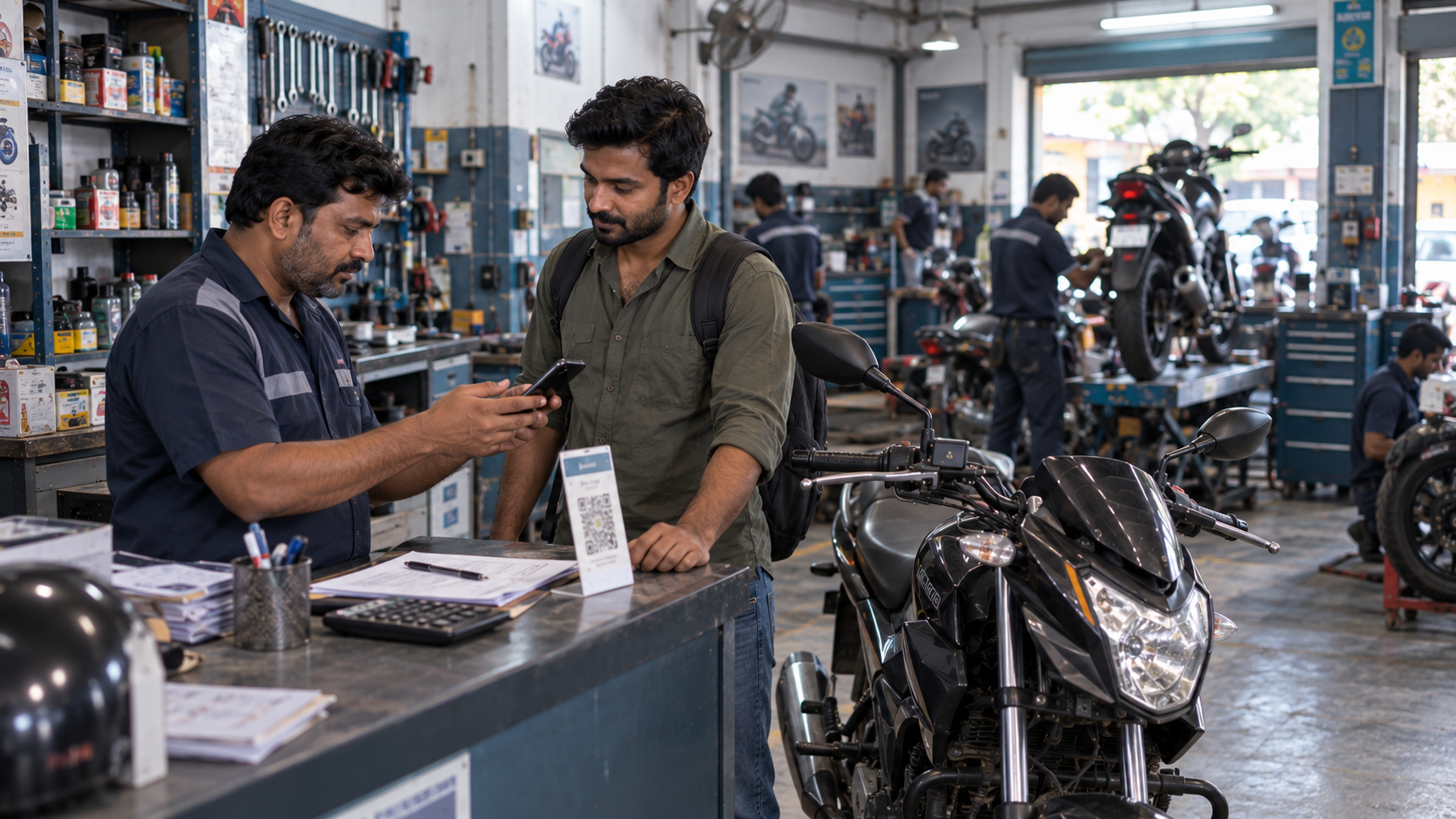
After a motorcycle is serviced, the final amount may be calculated manually or through a basic billing application. Customers commonly pay using cash or a static UPI QR code, after which the merchant manually checks the payment before handing the vehicle back.
THE PAYMENT GAP
The service may be complete, but payment confirmation can still be manual.
Static QR payments can accept an incorrect amount, while manual verification and disconnected transaction records add extra work before vehicle handover.
Whether it is a neighborhood garage or a larger authorized service center, static QR payments and manual confirmation can create avoidable problems at the final stage of the service journey.
The same payment QR can be used across transactions, requiring customers to manually enter the payable amount.
Manual amount entry creates the possibility of customers paying an incorrect amount.
Staff must manually check payment confirmation and match transaction details before completing the handover.
Relying on customer-provided payment confirmation can create a risk of fraudulent or misleading screenshots.
Manual payment checks can increase the time required to complete the transaction and return the motorcycle to the customer.
Disconnected payment processes make reconciliation and maintaining a clear digital audit trail more difficult.
Once servicing is complete, staff may still need to match the payment amount and transaction reference manually before returning the motorcycle. This additional verification can increase delivery time and create opportunities for payment disputes or revenue leakage.
THE HANDOVER BOTTLENECK
A completed service should not end with a manual payment check.
Linking the payment directly to the service invoice can reduce manual verification and create a clearer connection between the bill and the transaction.
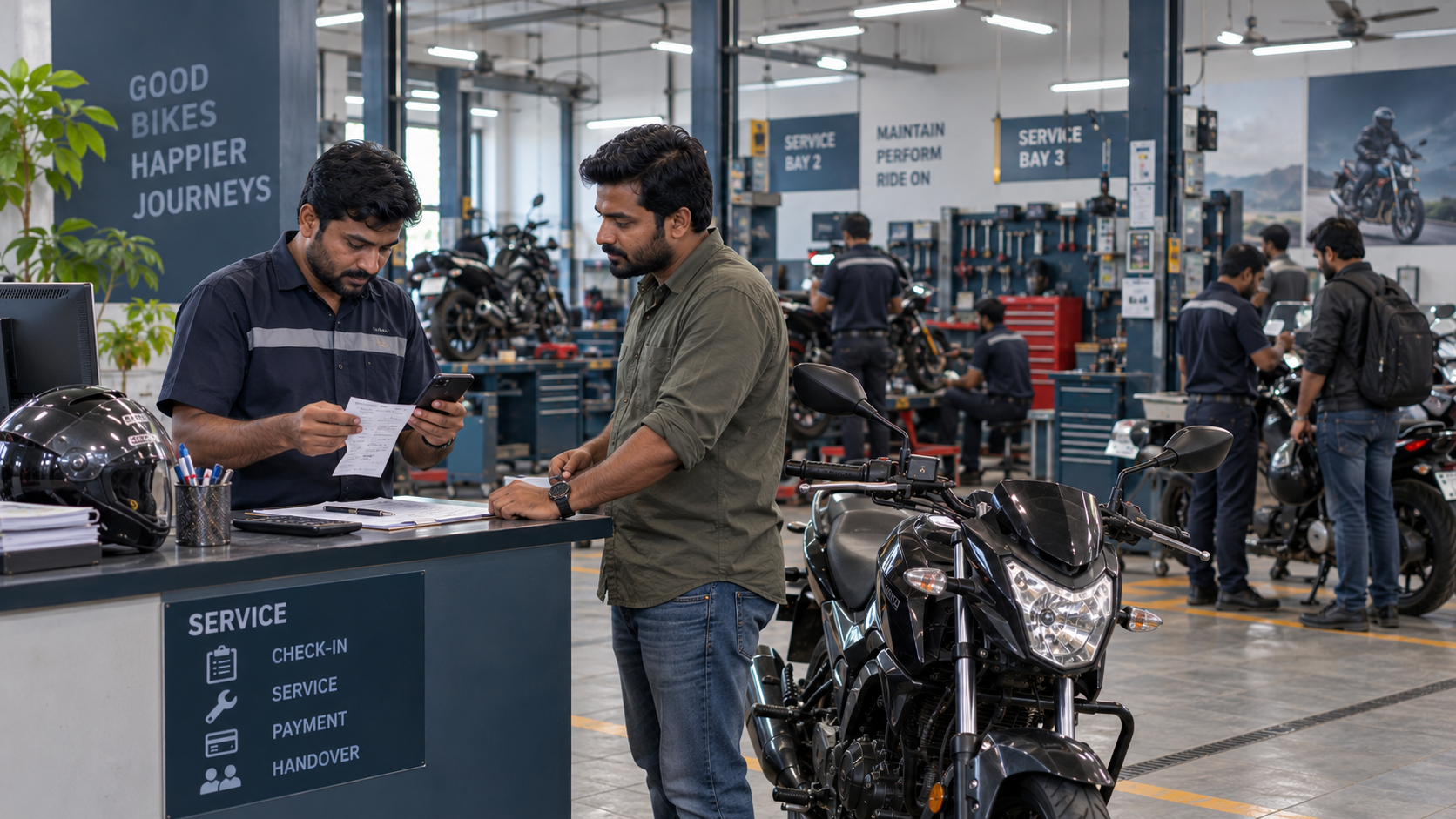
BrandPOS connects the final service bill with a unique payment request, creating a structured flow from job completion through payment verification and transaction reporting.
Record the customer and vehicle details when the motorcycle is received for service.
Finalize the billing information, including applicable labor, parts and taxes.
Create a unique payment QR linked directly to the completed service invoice.
The customer scans the payment QR with the payable amount already pre-filled and non-modifiable.
The payment is verified and transaction reports are updated automatically.
Instead of using the same static QR code for every customer, BrandPOS creates a unique digital invoice and payment request for each completed service, directly connecting the payment with that specific transaction.
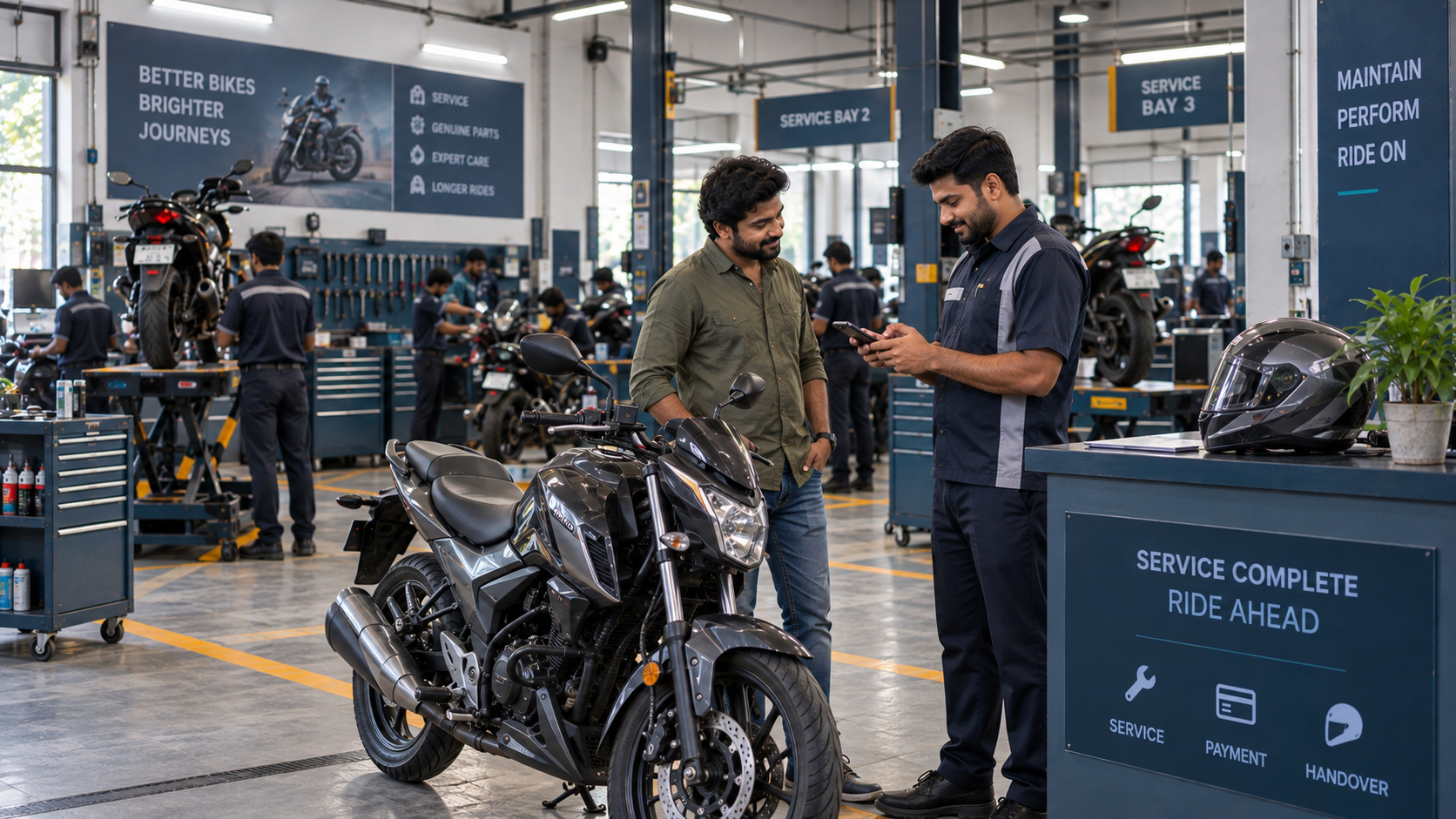
By connecting each completed service to its own payment request, BrandPOS can reduce the manual steps associated with static QR payments and make transaction confirmation more structured.
Each completed service receives its own payment request rather than sharing one static QR code across customers.
The final payable amount is already entered, reducing the risk of incorrect manual payment amounts.
Payment can be verified automatically instead of requiring staff to manually check the customer's confirmation.
Reducing manual payment verification can help shorten the final step before the customer collects the motorcycle.
Invoice-linked payments provide a clearer connection between the completed service and its corresponding transaction.
More structured digital payment records can reduce the difficulty associated with reconciling disconnected static QR transactions.
Move beyond static QR codes and manual payment verification with invoice-linked digital payments that can support faster vehicle handover, clearer transaction visibility and a more efficient payment experience.